
ICAR-CRRI and JSW JFE Steel Join Hands for Acid Soil Management and DAP Savings through EcoLime⁺ 
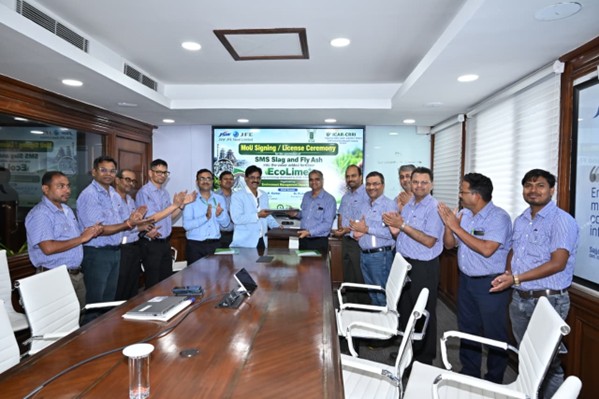
The ICAR–Central Rice Research Institute (ICAR-CRRI), Cuttack, has entered into a Memorandum of Understanding (MoU) with JSW JFE Steel Limited to promote the sustainable utilization of industrial by-products (slag) for agricultural applications through EcoLime⁺, an innovative product developed by ICAR-CRRI. The collaboration marks an important step towards strengthening industry–research partnerships, promoting the circular economy and developing sustainable solutions for improving soil health and agricultural productivity.
The MoU was signed by Dr. G. A. K. Kumar, Director, ICAR-CRRI, and Mr. Umesh Rai, Whole-Time Director & CEO, JSW JFE Steel Limited, in the presence of Dr. Pratap Bhattacharyya, Principal Scientist and Head, Crop Production Department, ICAR-CRRI, along with senior representatives from JSW JFE Steel Limited, including Mr. Prakash Sappa, COO, Mr. Manoj Patwari, Vice President & Zonal Head, Mr Santosh Kumar Pattajoshi, DGM-Environment and other Zonal Heads and members of the Environment Team.
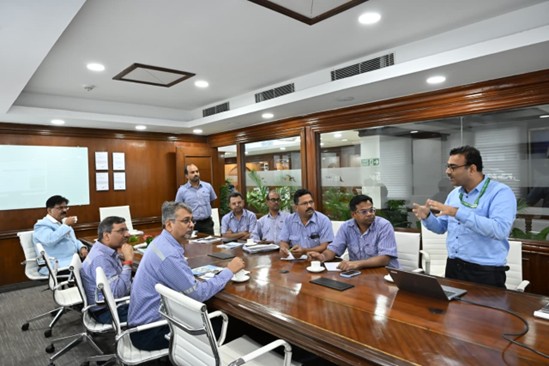
EcoLime⁺ is a value-added product developed by ICAR-CRRI using industrial by-products such as steel slag and fly ash, enriched with compost. The product supplies essential and beneficial plant nutrients, including calcium, magnesium, phosphorus, silicon, potassium and zinc, which contribute to improved soil fertility, crop growth and nutrient-use efficiency. One of the significant advantages of EcoLime⁺ is its potential to reduce the requirement for chemical fertilizers, particularly di-ammonium phosphate (DAP), by approximately 10–15% in acid soils through improved phosphorus availability and nutrient-use efficiency as explained by Dr. Pratap Bhattacharyya, Principal Scientist and Head, Crop Production Department, ICAR-CRRI, and lead developer of EcoLime⁺
The collaboration reinforces ICAR-CRRI’s commitment to developing climate-resilient, resource-efficient and farmer-oriented technologies. It also demonstrates the potential of industry–academia partnerships in advancing waste-to-wealth initiatives, conserving natural resources and promoting environmentally sustainable agriculture.
 |
 |
