
ICAR-CRRI Successfully Conducted Capacity Building Program on Functional File Numbering System in e-Office 
In a significant step toward modernizing its administrative and financial workflows, the ICAR-Central Rice Research Institute (CRRI ) successfully conducted a comprehensive capacity-building program today focused on the transition from conventional file management to the Functional File Numbering System (FFNS) under the e-Office initiative. In accordance with the Council’s communication (F.No. 4(4)/2025-ICT-I dated 17th April 2026) regarding the mandatory implementation of the Functional File Numbering System (FFNS) in e-Office, the specialized training program was conducted on 04.05.2026 at ICAR-CRRI, Cuttack.
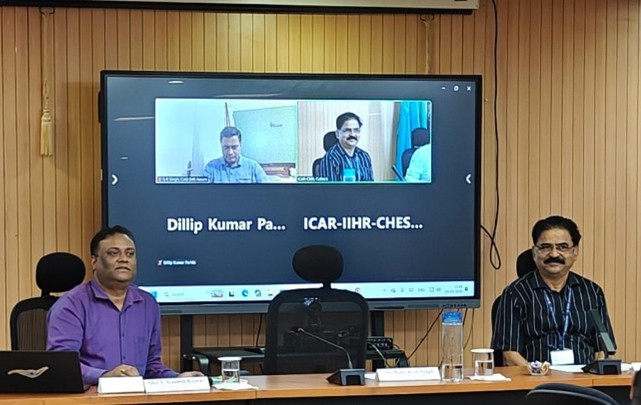
The program was inaugurated by Dr. G.A.K. Kumar, Director of ICAR-CRRI, and coordinated by Shri V. Ganesh Kumar, Senior Administrative Officer (SAO), who serves as the Assistant Zonal Coordinator for the East Zone. Supporting the regional effort, Shri Saroj Kumar Singh, Chief Administrative Officer at ICAR-IARI, Assam, oversaw the session as the Zonal Coordinator. In the opening session, the Director, CRRI gave call for urgent action to fully implement the Functional File Numbering System, while Dr. P Panneerselvam, Pr. Scientist & HRD Nodal Officer, assured all the support in conducting such capacity building programs, which the strengthen the system.
The intensive training session was designed to equip the ICAR’s administrative and scientific personnel with the necessary skills to navigate the new digital workspace, ensuring greater transparency, efficiency, and alignment with modern institutional governance standards.
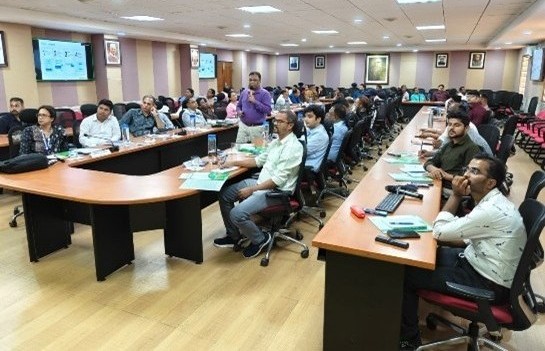
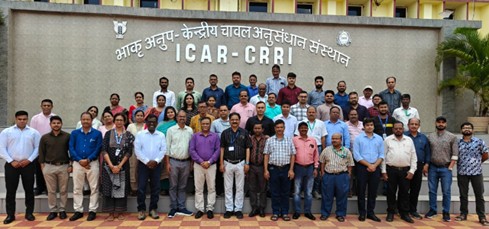
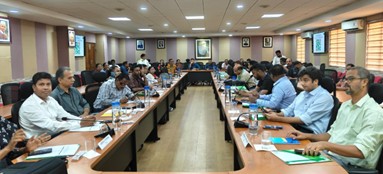
The program was designed specifically for the Odisha Cluster of ICAR institutes, bringing together nodal teams from the Indian Institute of Water Management (IIWM), the Central Institute for Women in Agriculture (CIWA), the Central Institute of Freshwater Aquaculture (CIFA), Central Rice Research Institute (CRRI) and the National Institute on Foot and Mouth Disease (NIFMD). The program saw active participation from 58 officials across five research institutions.
The program covered critical aspects of standard administrative procedures, including the complete lifecycle of official records, proper categorisation of closed files (Classes A, B, and C), and the stringent application of Record Retention Schedules for weeding. A major focus of the day was the mandatory shift to the activity-based FFNS, replacing the older section-based filing system. Participants were trained on the hierarchical structure of standard heads—Basic, Primary, Secondary, and Tertiary—and the appropriate use of standard alpha codes. The program was delivered by Shri Saroj Kumar Singh, CAO, IARI-Assam and Shri V Ganesh Kumar, Sr. A.O, CRRI, Cuttack, as resource persons.
A key highlight of the day was the measurable success of the training module itself. A comparative analysis of pre- and post-training assessments revealed a dramatic improvement in the participants’ grasp of the new protocols. While initial scores indicated an average understanding of conventional methods, the post-training evaluation showcased an exceptional mastery of the e-Office framework, with numerous participants achieving perfect scores. This sharp upward trajectory highlights the effectiveness of the training curriculum and the readiness of the Odisha cluster staff to embrace digital transformation.
The successful implementation of the Functional File Numbering System is expected to logically group institutional records by subject matter, safeguarding against the loss or misplacement of files even during internal departmental reorganizations.
The conclusion of the workshop served as the starting gun for a high-speed implementation phase. Pre-training assessments showed an average score of 6.7 out of 15, which surged knowledge growth to 12.5 out of 15 in the post-training evaluation.
The new “Substantive Functional File Heads” were discussed finalized during the program. This transition is expected to significantly enhance administrative efficiency and ensure the digital resilience of the Odisha-based ICAR institutes.
All participating nodal teams have been issued directives to complete the following within five working days:
1. Cascade Training: Nodal officers must replicate the training sessions for all staff members within their respective institutes.
2. Immediate Adoption: All new files created in the e-Office environment must strictly adhere to the FFNS “Non-SFS” functional heads.
3. Refinement Submissions: Any required new “Substantive Functional File Heads” must be proposed and submitted to the Zonal Coordinators, to finalize the digital framework.
Shri Rishi Kant Singh, Sr. Finance & Accounts Officer, CRRI extended vote of thanks to the Zonal coordinators, ICAR ICT team for planning such an excellent activity and also all the team members of ICAR-CRRI, Cuttack for successful conduct of the program with their support. The support of the Directors of the participating institute was also duly acknowledged on this occasion.
 |
 |
 |
 |
