
Empowering Farmers with Climate-Resilient Paddy Production Technologies
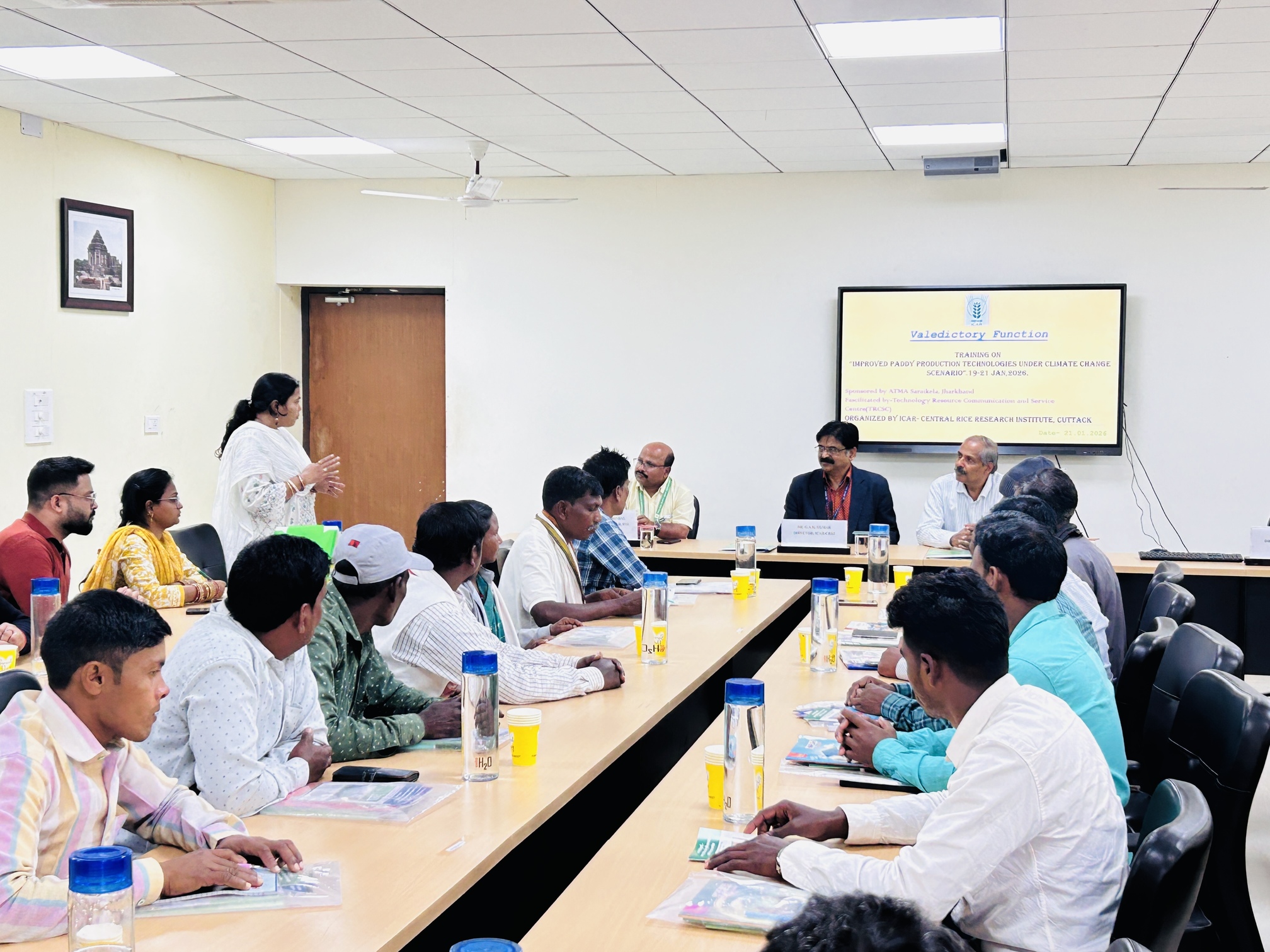
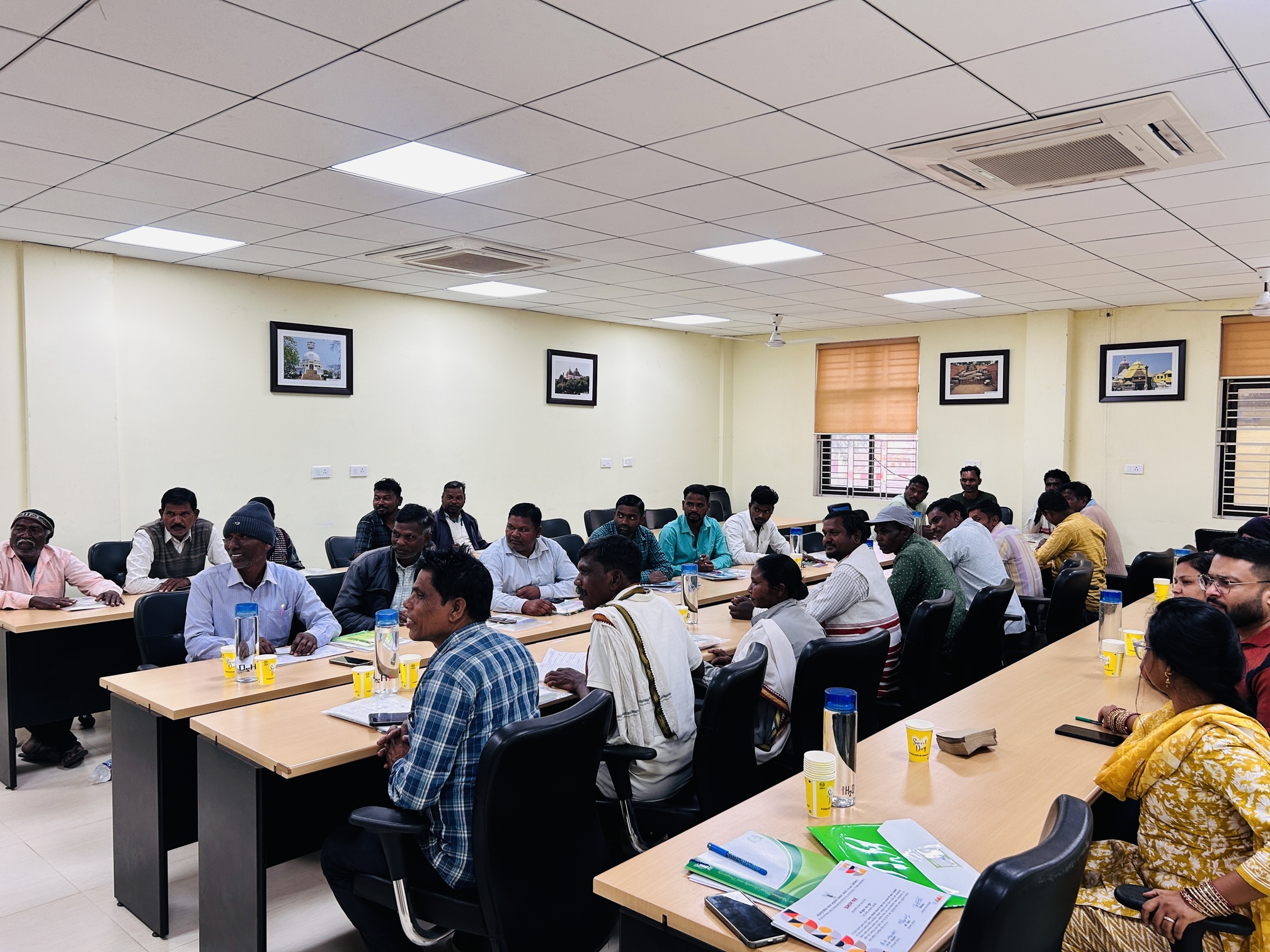
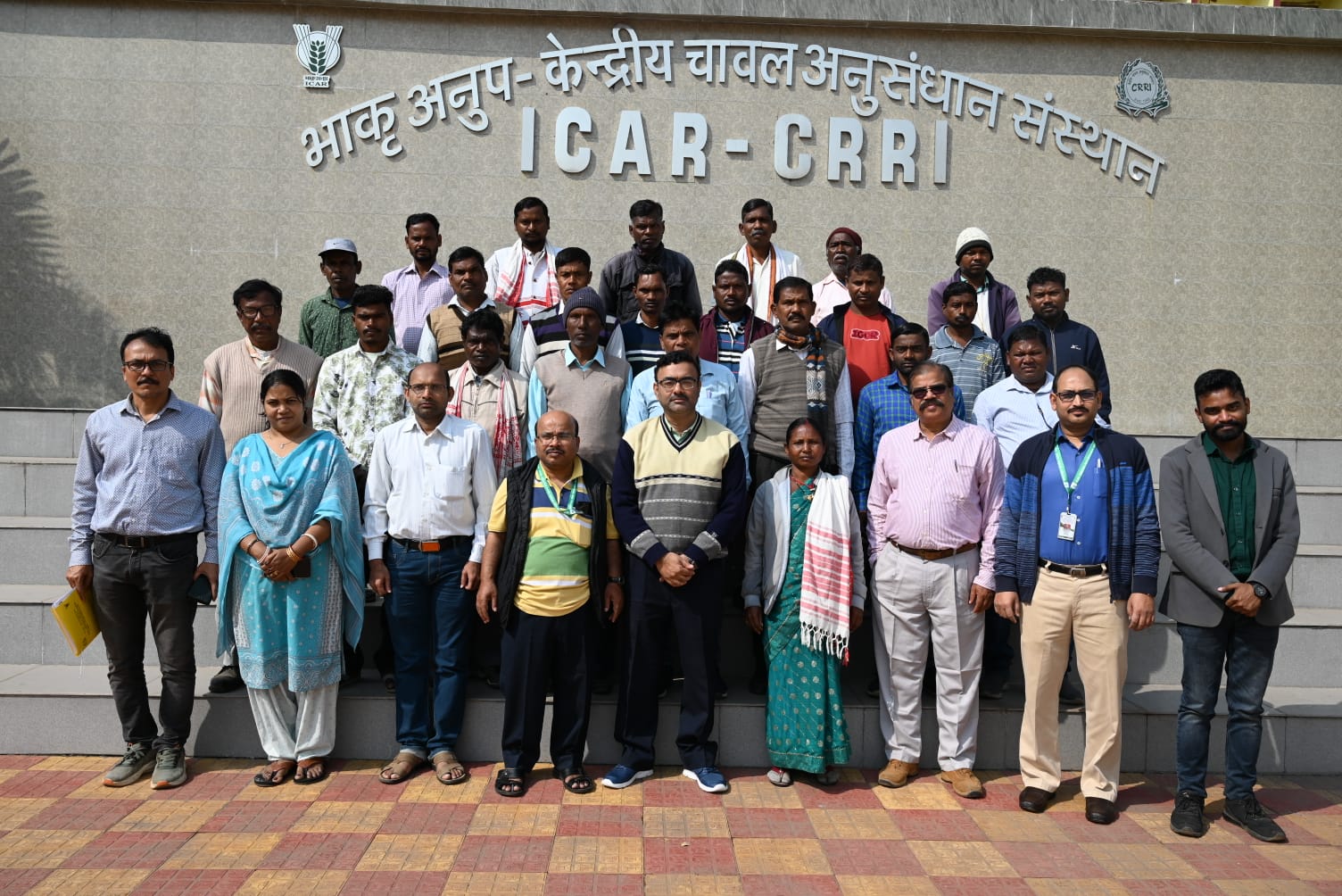
A farmers’ training programme entitled “Improved Paddy Production Technologies under Climate Change Scenario” was successfully organized by the ICAR–Central Rice Research Institute (CRRI), Cuttack, during 19–21 January 2026, with generous sponsorship from ATMA, Saraikela, Jharkhand. The programme witnessed the enthusiastic participation of 25 farmers from Saraikela, who actively engaged in the learning process.
The training programme illuminated various crucial facets of modern rice cultivation in the context of climate variability. Major topics included rice varieties suited to diverse ecosystems, integrated management of diseases and insect pests, integrated nutrient and weed management practices, rice–fish integrated farming systems for rainfed lowland and deepwater areas, value addition in rice, economic analysis of rice cultivation, and bio-fertilizer production at CRRI. These subjects were elaborately discussed with the objective of strengthening farmers’ technical competence and practical skills for sustainable rice production.
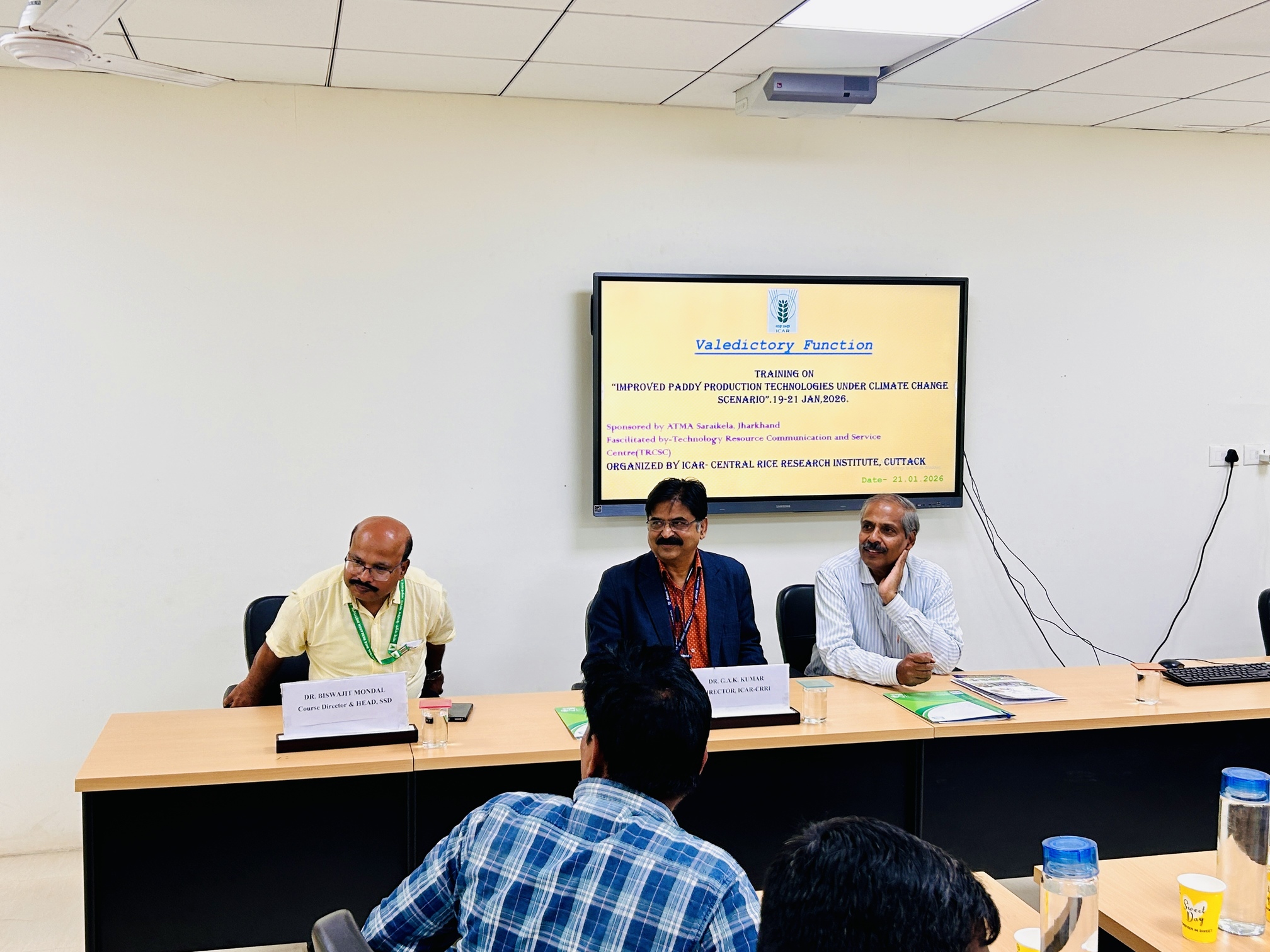
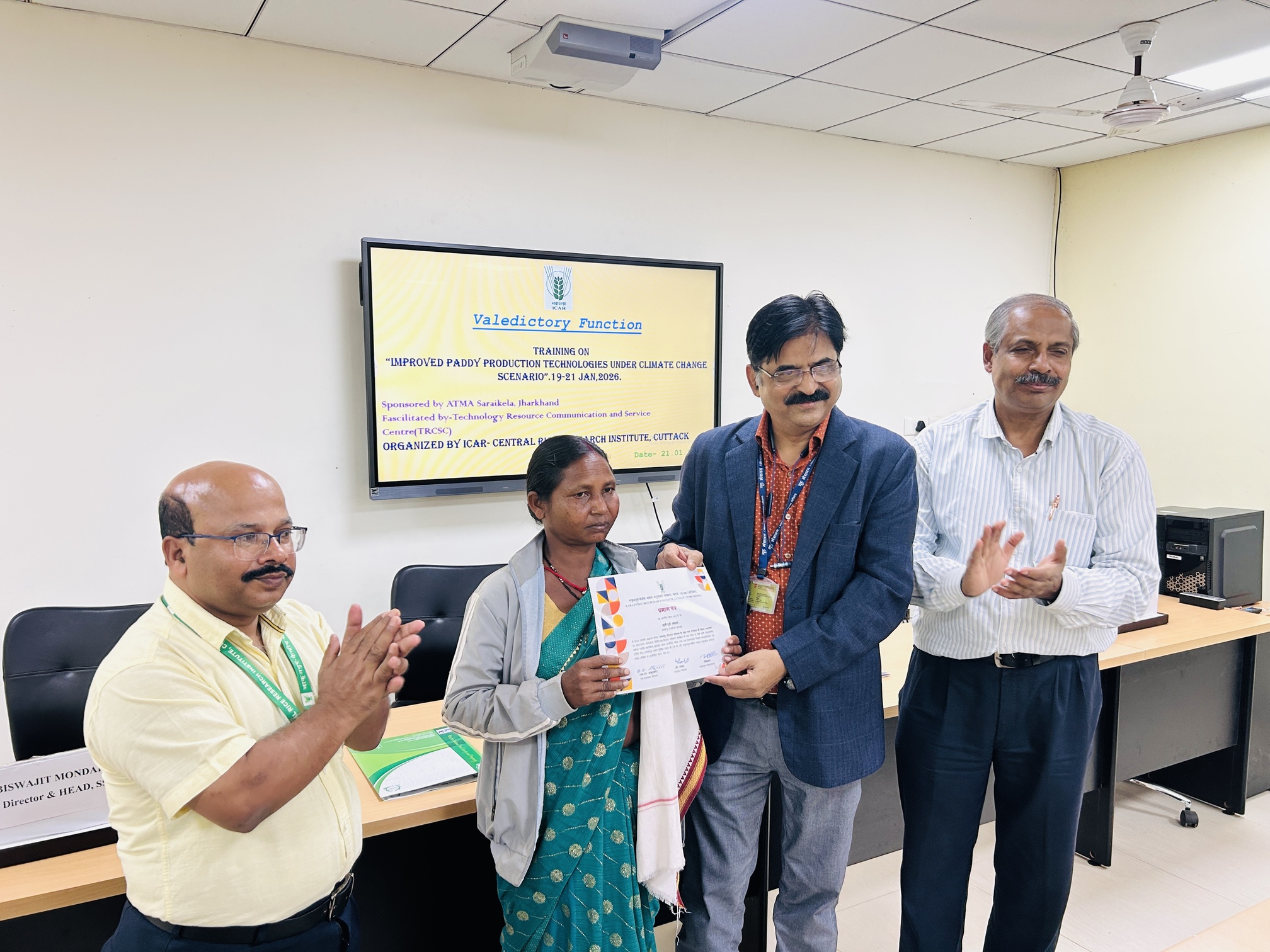
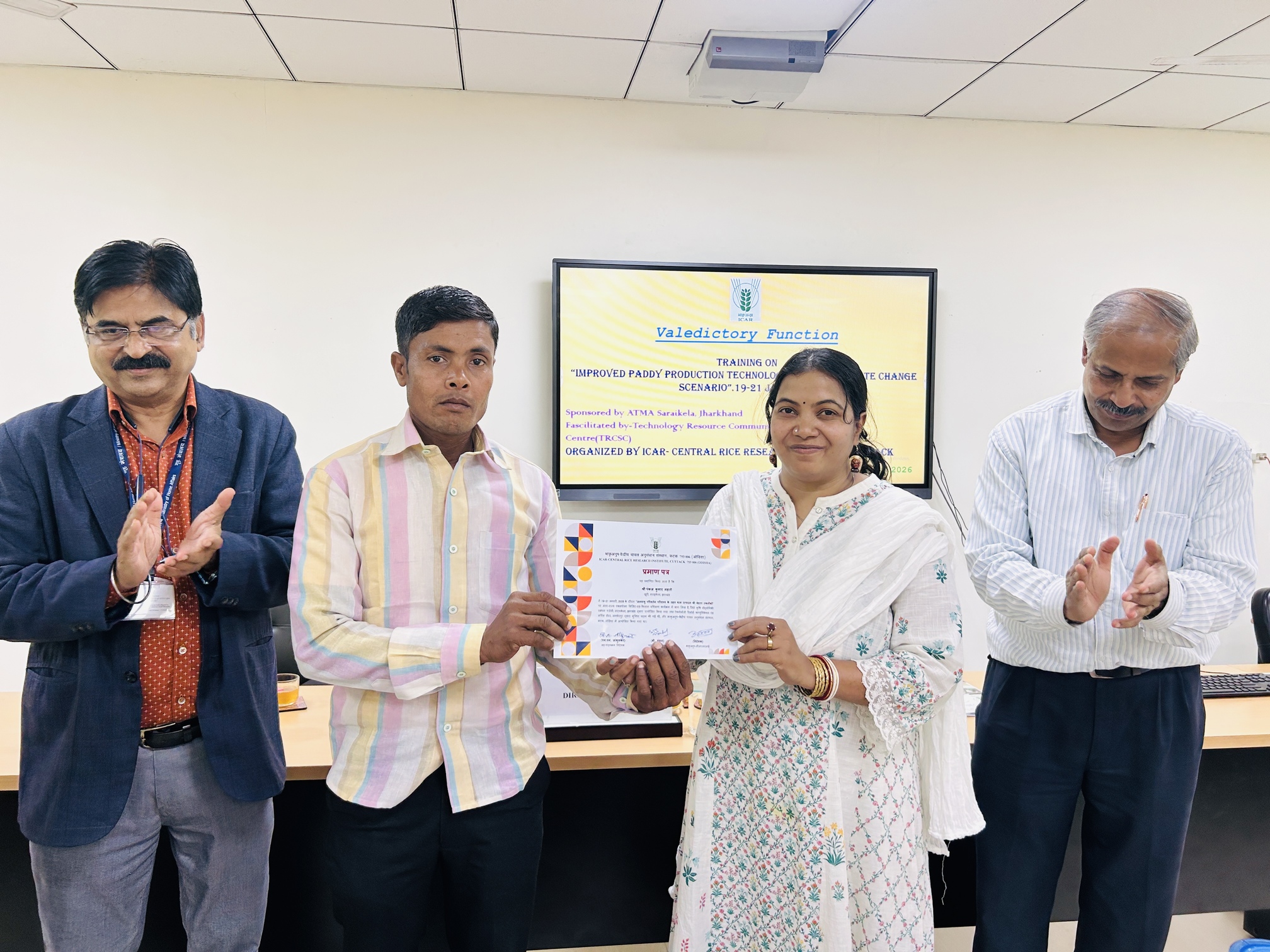
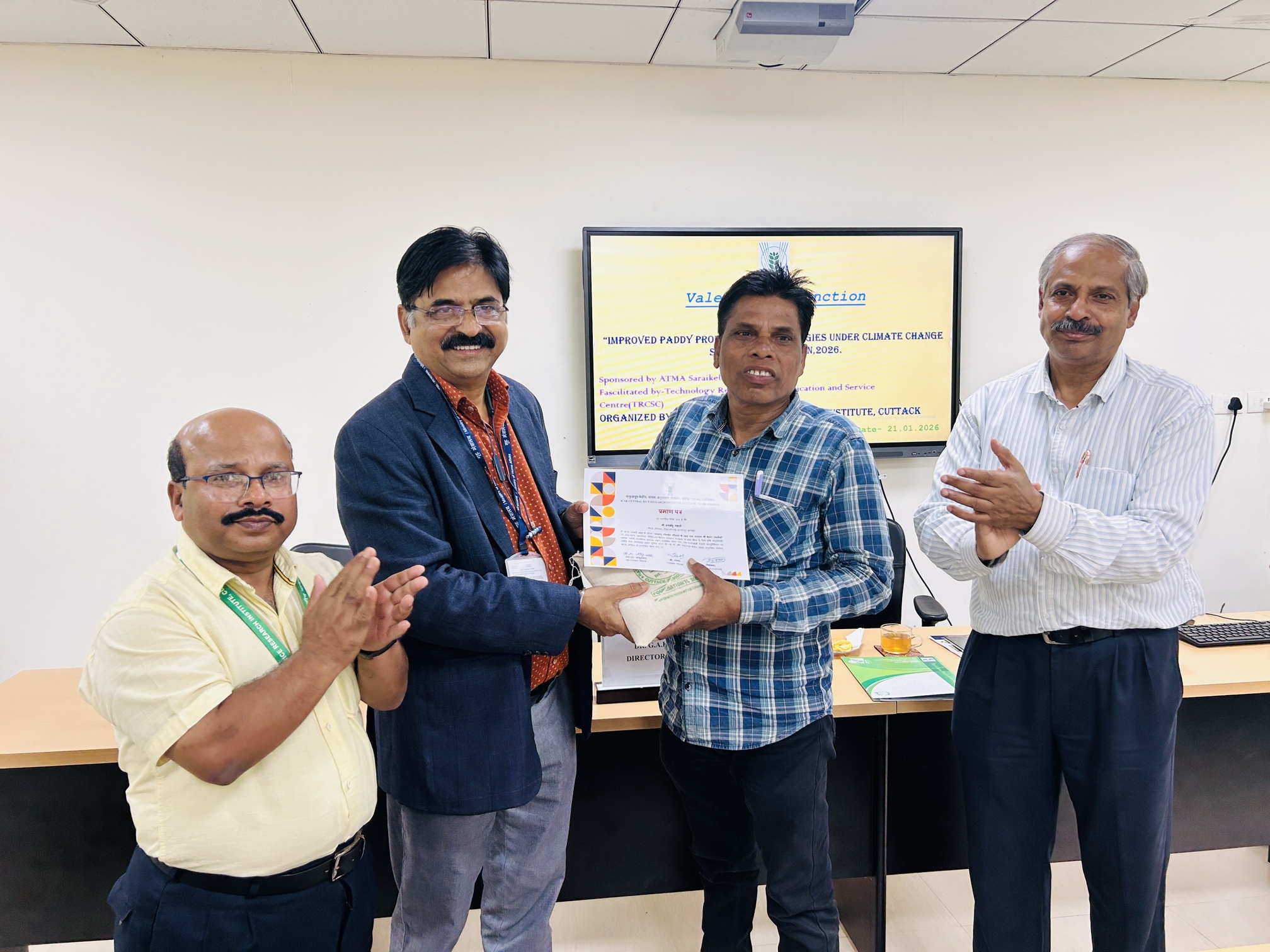
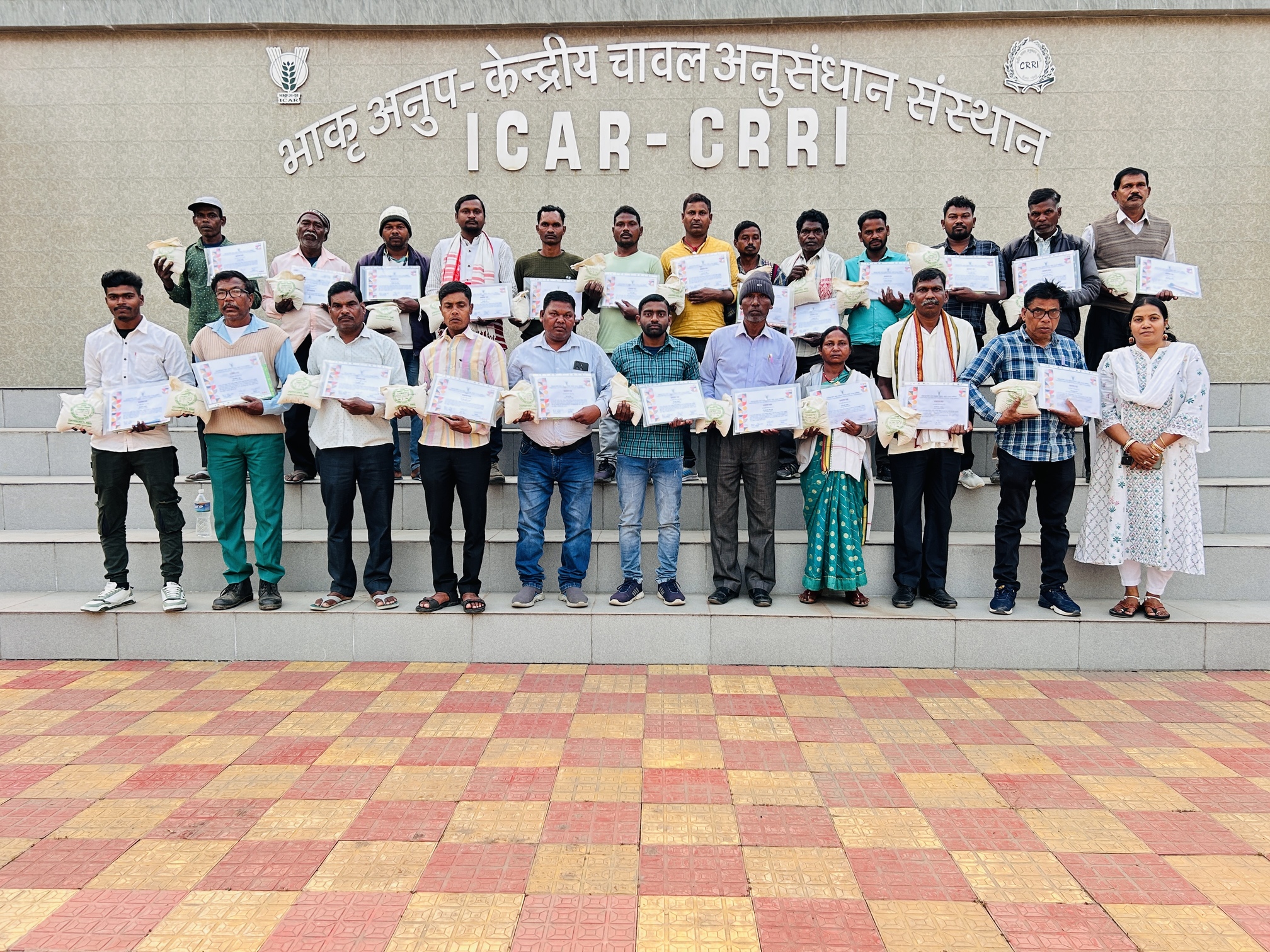
The programme culminated in a valedictory session graciously chaired by Dr. G.A.K. Kumar, Director, ICAR-CRRI, Cuttack, who delivered insightful remarks, urging the farmers to register with Farmer Producer Organizations (FPOs) and adopt off-season cultivation practices. Dr. P.K. Dey, Director, ATARI, Zone-V, graced the occasion as the Guest of Honour and emphasized the need to align agricultural practices with climate change adaptation, market demand, and cluster farming approaches to enhance farmers’ income. Certificates were also distributed to the participants in the presence of the distinguished guests. The training programme was ably steered by Dr. Biswajit Mondal, Principal Scientist, as the Course Director, with valuable support from Dr. N.N. Jambhulkar, Senior Scientist, who served as the Co-Course Director. Dr. Gayatri Sinha, STO, coordinated the training programme.
 |
 |
 |
 |
 |
 |
 |
 |
