
Recent achievements of ICAR-CRRI, Cuttack
1. Crop Improvement Research
ICAR-National Rice Research Institute (formerly the Central Rice Research Institute) in Cuttack is the premier institute for rice research in India, established in 1946 in response to the infamous Bengal famine. During initial stages, the institute’s mandate was to collect and conserve germplasm. However, after the introduction of semi-dwarf genotypes in the late 1960s, its focus shifted to varietal development for the rainfed shallow lowland (RSL) ecosystem.
Indica-Japonica Rice Hybridization Program:
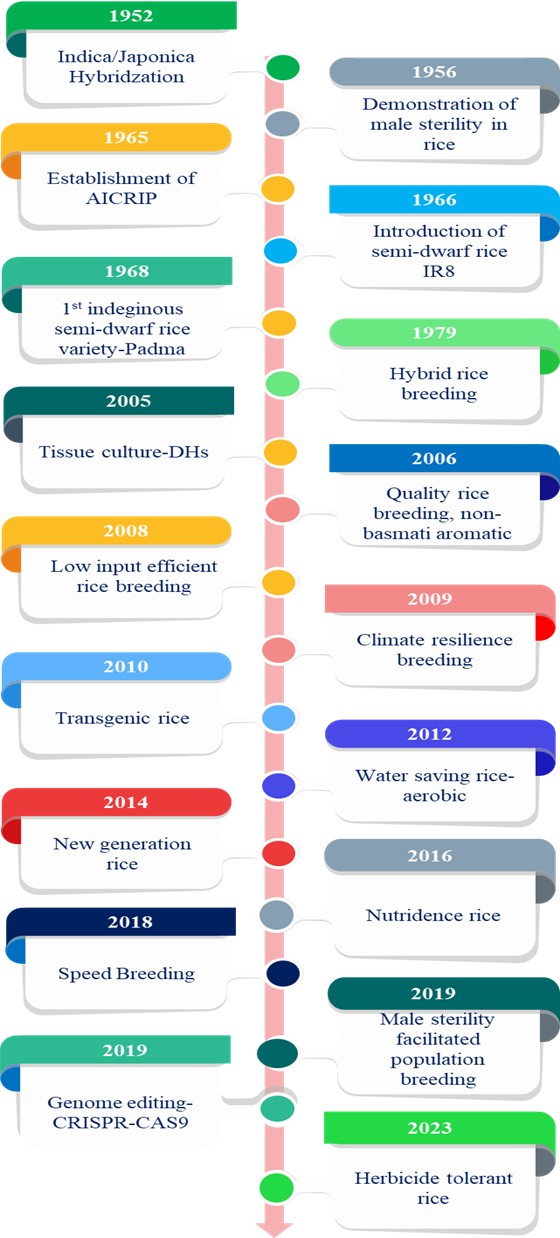
As a leading center in the FAO-funded International Cooperative Rice Breeding Project, CRRI undertook an intensive program to hybridize japonica with indica rice in 1952. The F2 seeds from these hybrids/crosses were shared with cooperating centers and rice research stations to select the most suitable varieties for different regions. From the hybridized population sent by CRRI to institutions in India and abroad, the Regional Research Station at Aduturai, Madras, identified a promising variety, ADT-27, which was subsequently released during 1960 for Indian subcontinent. Other varieties such as Mahsuri and Malinja in Malaysia and Circna in Australia were also identified and released through this program.
Cytogenetics of rice and its species:
Furthermore, during 1956, cytological basis for spikelet sterility/male sterility in indica x japonica hybrids (Sampath and Mohanty, 1954) was established at NRRI, a discovery later leveraged by Chinese scientists for commercial hybrid rice development.
AICRIP established
In 1965, the All India Coordinated Rice Improvement Project (AICRIP) was launched in Hyderabad to evaluate breeding materials across multiple locations. Initially part of CRRI, AICRIP was later renamed the Directorate of Rice Research (DRR) and became an independent institute directly under ICAR.
Varietal research and progress
Introduction of semi-dwarf variety:
Taichung Native 1 (TN1), the first high-yielding semi-dwarf variety introduced in India by Dr. G.V. Chalam in 1966, which was initially widely cultivated but eventually replaced by IR-8 from IRRI. CRRI scientists crossed TN1 with several improved tall Indian varieties, resulting in the semi-dwarf, high-yielding variety Padma, which was released by the Government of India in 1968. Padma (CR 28-25, IET 953) had a growing duration of 120 days, short bold, medium resistance to blast and other major diseases and pests with yield of 3.5-4.0 t ha-1. The Institute celebrated the Golden Jubilee of release of Padma in 2018 by releasing a golden plaque. To date, ICAR-NRRI has developed 185 rice varieties including 06 hybrids for different agro-ecologies.
Inception of hybrid rice research:
The institute pioneered hybrid rice research, starting its breeding program in 1979, well before the 1989 ICAR project. In the beginning, ICAR-NRRI has acquired all the prerequisite materials (CMS lines viz. V 20A, Yar Ai Zhao A, Wu10A, MS 577A, Pankhari 203A, V 41A, Er-Jiu nanA, respective maintainers, nine other maintainers and thirteen restorers) from the IRRI (NRRI Annual Report 1981-82) and has commercialized 06 popular hybrids, namely Ajay, Rajalaxmi, CR Dhan 701, 702, 703 and 704.
Aromatic rice breeding:
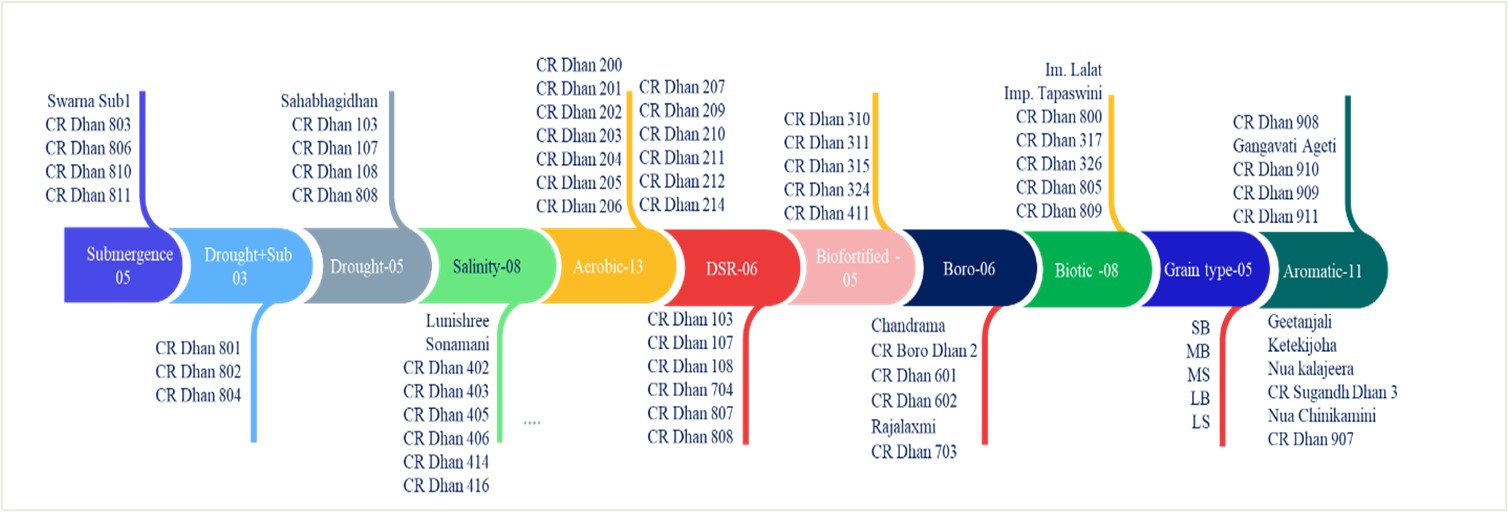
Indian sub-continent is well known for its native wealth of basmati and aromatic non-basmati rice, of which aromatic short grain (ASG) types remain important with respect to aroma, cooking and quality traits. These traits are responsible for greater consumer preference globally and fetching premium prices in domestic as well as in global markets. The institute launched a targeted aromatic rice breeding program in 2006, resulting in the development of eleven premium-quality aromatic rice varieties: Geetanjali, Ketekijoha, Nua Kalajeera, CR Sugandh Dhan 3, Nua Chinikamini, CR Dhan 907, CR Dhan 908, Gangavati Ageti, CR Dhan 910, CR Dhan 909 and CR Dhan 911, each suited to different ecological conditions.
Low input responsive variety:
In 2008, the institute began breeding of low-input responsive rice varieties, leading to the development of varieties like Sahbhagidhan, Vandana, CR Dhan 103, 107, CR Dhan 108 has been released for cultivation. Besides, institute has a rich breeding pool with excellent pipelines for low nitrogen and phosphorus efficiency, many are nominated under national evaluation trials.
Climate resilient variety:
The climate-smart rice varieties (Swarna Sub1, CR Dhan 801, CR Dhan 802, CR Dhan 803, CR Dhan 804, CR Dhan 806, CR Dhan 807, CR Dhan 808, CR Dhan 810, CR Dhan 811), developed through Marker-Assisted Selection (MAS), are particularly notable for enhancing the sustainability of rice cultivation in the face of climate challenges.
Aerobic rice:
In 2012, the institute released water-saving varietal technology for aerobic conditions and notified a total of 13 aerobic rice varieties for cultivation across the country. These include CR Dhan 200, CR Dhan 201, CR Dhan 202, CR Dhan 203, CR Dhan 204, CR Dhan 205, CR Dhan 206, CR Dhan 207, CR Dhan 209, CR Dhan 210, CR Dhan 211, CR Dhan 212 and CR Dhan 214. The Direct Seeded Rice (DSR) system promotes efficient use of water and nitrogen, reduces greenhouse gas emissions, and lowers labour demands, eliminating the drawbacks associated with the transplanted rice system. The institute has developed CR Dhan 807, the first non-GMO and non-basmati herbicide-tolerant variety in 2023, suitable for DSR cultivation. Additionally, the institute has commercialized five rice varieties/hybrids—Sahbhagidhan, CR Dhan 103, CR Dhan 107, CR Dhan 808, and CR Dhan 704 (hybrid), all of which are well-suited for DSR cultivation.
Super rice:
To shift yield paradigm in rice, institute has adopted next generation rice breeding strategy, could release three super rice varieties, CR Dhan 307, CR Dhan 314 and CR Dhan 316 with 8.0 t/ha yield potential during 2014.
Nutridense rice:
The institute has made significant contributions to nutrition by releasing five nutridense rice varieties in 2016: CR Dhan 310 (high protein), CR Dhan 311 (high protein and moderate zinc), CR Dhan 315 (high zinc), CR Dhan 411 (high protein), and CR Dhan 324 (high protein, moderate zinc, and iron).
Population breeding and progress
To broaden the genetic base of the varieties and enhance sustainability under changing climate, the institute has adopted QG-based population breeding strategies in 2019 and notified the high-yielding variety CR Dhan 312 for cultivation.
Bio-technology research and progress at ICAR-NRRI
Tissue culture facility and progress:
Since its inception, the institute has led ground-breaking research and adopted cutting-edge strategies in developing high-yielding rice varieties, contributing significantly to India’s self-sufficiency in rice production. During 2005, the institute has established well equipped tissue culture facilities and notified total 05 doubled haploid varieties, Satyakrishna (irrigated), Phalguni (irrigated), CR Dhan 323 (for RSL), CR Dhan 324 (nutridense for protein, Zn & Fe) and CR Dhan 911 (aromatic) for the state of Odisha. Instantaneously, developed genotype-independent androgenic protocol “Method for Albino-Free Shoot Regeneration in Rice through Anther Culture” for indica rice granted patent (No. 401679), July 20, 2022 has been successfully commercialized, enabling the accelerated delivery of crop varieties and facilitating trait mapping.
MAS/MAB in rice improvement:
The institute is equipped with advanced laboratory facilities for genomics, could notified climate-resilient varieties, Swarna Sub1, CR Dhan 801, CR Dhan 802, CR Dhan 803, CR Dhan 804, CR Dhan 806, CR Dhan 807, CR Dhan 808, CR Dhan 810, and CR Dhan 811. Additionally, biotic stress-tolerant varieties such as Improved Lalat, Improved Tapaswini, CR Dhan 107 (blast), CR Dhan 317 (BPH), CR Dhan 326 (BLB), CR Dhan 800 (BLB), CR Dhan 805 (BPH), and CR Dhan 809 (BPH) have been notified for cultivation in stress-prone zones.
Genome editing:
In 2019, the institute adopted genome editing tools for rice improvement. With strong expertise and advanced facilities in genome editing, the institute developed TnpB, a miniature genome editing tool, as an alternative to Cas9/Cas12a for crop improvement applications. Its small size enhances the versatility of TnpB, making it ideal for creating a range of editing tools and enabling virus-mediated delivery to plant cells.
Speed breeding
The global climate change and change in consumer’s food habits have necessitated reorientation of breeding strategies. The changing climate and its unpredictability has compelled to breed for high performing climate resilient crop varieties on one side, whereas, the demand for high antioxidants, low GI, low phytate and pharmaceutically acceptable, high value rice is growing up to provide better nutrition, health benefits and higher income. Institute has adopted speed breeding (SB) based varietal development technologies during 2018, which enables accelerative delivery of demand-led high performing, climate resilience and resistance crop varieties in 05-06 years by saving almost 50% time, 90% space and 50% inputs. Other cutting edge technologies like genomic selection and genome editing are also adopted to maximize substantial genetic gain in our rice breeding pipelines.
2. Crop Production Research
Research on crop production aspect initiated with the disciplines of Agronomy and Agricultural Chemistry, which were created with the inception of the institute in the year 1946. The discipline Agricultural Engineering was added during the Second Five Year Plan period. A sub-station was opened at Canning, West Bengal during the Second Five Year Plan to study the problems of rice growing in saline soils. This was transferred to the Central Soil Salinity Research Institute in 1959. The blue-green algae scheme was established at the Institute in 1961 to conduct investigations on collection, survey and identification of nitrogen-fixing blue-green algae, evaluation of relative nitrogen fixing capacity of the various species, factors favouring their activity and their field application in rice production. Subsequently, this scheme took the shape of discipline of soil microbiology to include work on bacterial nitrogen fixers in addition to blue-green algae, microbiological studies on the rice rhizosphere, nature of organic matter of tropical rice soils. In the Fourth Five Year Plan, the different research disciplines at the Institute was organized into major divisions and research sections for conducting production oriented basic and applied research with emphasis on multi-discipline participation. With this crop production related disciplines were grouped under the division of Crops and Soils, which included sections viz. General Agronomy, Irrigation Agronomy, Soil Physics, Soil Chemistry, Microbiology and Agricultural Engineering. Subsequently, disciplines related to crop production were reoriented and designated as Agronomy, Soil Science & Microbiology, Agricultural Engineering and Fish & Fisheries. Again, in the year 2006, all these sections were merged together retaining their research identity to form the current Crop Production Division.
Research has been done in the following aspects:
• Studies on rice in relation to its environment with suitable modifications of some of the environmental condition which govern crop establishment, weed control, maintenance of soil fertility, water use with improved cultural practices for maximizing rice production have been the objectives of Agronomy section.
• The Soil Science section deals with management of nutrients through integration of chemical, organic and biological sources for rice and rice based cropping system targeting soil productivity enhancement through assessing and enhancing soil quality and resilience with reference to sustainable crop production. Management of problem soils, optimization of soil tillage, simulation and system analysis techniques for site specific nitrogen management, sensor-based monitoring of greenhouse gas are also part of the ongoing research programme.
• Microbial resource mapping, diversity analysis and molecular characterization of beneficial microbes having roles in pesticide biodegradation, biogeochemical cycling of nutrients, entomo-pathogenic and abiotic stress moderating action in rice soils are the major research activities of the Soil Microbiology unit.
• Agricultural engineering section comprising three disciplines namely: (i) Farm machinery and power (ii) Soil and water conservation and (iii) Agricultural process engineering. Small farm mechanization through design and development of efficient tools and implements that reduces human drudgery, time and cost of operation is the focus area of farm machinery and power engineering.
• In addition to the improvisation in field operations, focus was also given to better water management practices for economic and efficient use of available water. Besides mechanization in crop production, improvised post production techniques such as cleaning, grading, drying, processing and storage to improve the quality of food grains and by-products are being developed.
• The various other activities of the section are (i) Design and development, (ii) Testing and evaluation, (iii) Consultancy to farmers, manufacturers and rice processing units, (iv) Instrumentation, (v) Repair and maintenance of farm implements, tube wells, pumps and farm structure, and (vi) Training to farmers, artisans, entrepreneurs.
• Theme areas of research being undertaken at the division are nutrient management for enhancing productivity and resource use efficiency in rice; assessing energy and water footprints and increasing water productivity in rice-based systems in Mahanadi Delta; agro-ecology-based intensification of rice-based cropping system for enhancing productivity and profitability; integrated rice-based farming systems for enhancing climate resilience and profitability in eastern India; increasing productivity and input-use efficiency in rice-based production systems with resource conserving technologies; assessing weed dynamics in rice and evaluating germplasms and new herbicides for its management; economic and environment-friendly use of rice straw; mechanization of rice-based cropping systems for higher productivity and energy use efficiency; harnessing microbial resources for alleviating abiotic and biotic stresses for improving soil health.
3. Crop Protection Research
Crop protection Division has worked on various aspects of crop protection strategies and came out with technologies, products and processes to minimize the ever challenging problems of rice pests. Presently, the Division is working to fulfil the current and upcoming challenges with following objectives:
- Exploration of new sources of donors for multiple resistance against different insect pests and diseases of rice and unravelling the mechanism thereof
- Discerning the ever-changing bio-ecology of rice insect pests and diseases for climate smart protection strategies
- Bio-intensive approaches for pest management in rice as a key component of Integrated Pest Management (IPM) technologies
- Optimization of chemical pesticide-use for management of rice pests in different eco-systems and understanding the extent of pesticide pollution in rice ecosystems and its effects
The Crop Protection Division is conducting basic, strategic and applied research on integrated management of rice pests to improve rice productivity, quality and profitability. The Division is actively engaged in different major aspects of rice protection sciences e.g. (1) identification of genotypes with novel genes/QTLs against rice pests; (2) predicting the biology and severity of different pests in anticipated climate change scenario; environment friendly pest management using predators, parasitoids, microbial agents and plant based products for minimising the use of chemical pesticide. Major thrust has been given on multiple pest resistant genotypes, pest modelling and forecasting, tri-trophic interaction of rice, pests and predators/parasites under climate change, novel molecules and eco-friendly formulations for the management of field and stored grain pest. The Division is also involved in designing, validating and popularising pest-specific and ecology-based IPM modules for the farmers to ensure sustainability and profitability.
Research was done on biology and ecology of major insect pests like stem borers, brown plant hopper (BPH), white backed plant hopper (WBPH) and gall midge. Epidemiology of diseases like blast and brown spot with physiological specialization enabling to forecast different diseases of common occurrence. Valuable resistant donors against these insect pests and diseases were identified at this institute and have been widely used by researchers in the country and abroad. The Division has identified resistance donors against different pests and developed novel technologies to address the pest damages.
Salkathi and Dhobanumberi showed promising antibiosis against BPH; further novel quantitative trait loci associated with brown plant hopper resistance in the rice landrace Salkathi has been identified (qBph4.3 and qBph4.4.) (Mohanty et al. 2017). Utilizing these resistant accessions, different genotypes have been developed in the back ground of popular rice varieties Tapaswini, Pusa 44 and Samba mashuri. Some genotypes like CR 2711-76, CR2712-227, CR2711-114, CR 2711-139, CR 2711-149, CR2712-2, CR 2712-11- 1, CR 2712-11-13, CR 2712-229, CR 2713-8, CR 2714-2 were identified as highly resistant to BPH out of which CR2711-114, CR 2711-76, 2711-139, CR 2711- 149, CR 3005-77-2, CR 3005-230-5 and CR 3006-8-2 were found highly promising in the co-ordinated trials of IIRR (earlier DRR), Hyderabad, (CRRI, 2013; AICRIP, DRR, 2006-2010). Cultivar CR2711-76 developed with the introgression of resistance from genotype Dhobanumberi in the background of high yielding cultivar Tapaswini at NRRI Cuttack, India, has a single dominant gene, Bph31.
Concerted efforts for identifying source of resistance started at Institute in 1948. Since then, mechanism of resistance is being understood in rice. The antixenosis and antibiosis were studied in depth to understand the mechanism of resistance in rice pests. The yellow stem borer resistant variety, TKM 6, exhibited highest antibiosis as far as the larval survival and growth are concerned. In addition, susceptible cultivar Jaya possessed higher amounts of total and reducing sugars, amino acids and starch whereas the resistant TKM 6 and PTB 18 had more amount of total phenols (Padhi and Rao 1978). It was found that the resistant gene, Gm4 identified from PTB10 was an ideal candidate for deployment in gene pyramiding (Mohaptra et al. 2014). Gene pyramiding of gall midge resistance genes (Gm1, Gm4) into an elite cultivar, Improved Tapaswini was completed. Out of the ten gene pyramids, ITGP7 (IT+Gm1+Gm4) showed high levels of resistance similar to resistant controls (Das et al. 2018).
A polymerase chain reaction (PCR) based assay has been developed that distinguished five different biotypes of the Asian gall midge (biotype 1 to biotype 5). Five diagnostic PCR products were isolated, cloned, sequenced and converted to sequence characterized amplified regions (SCARs). It was found that Cuttack (Odisha) populations distinctly different from those of Warangal and Raipur (Behura et al. 2002). An important study established a karyological sexual dimorphism in rice gall midge. Six chromosomes are present in the metaphase ganglionic cells of larvae populations generating males and eight chromosome populations generating females (Sahu et al. 1996).
The Division has identified highly tolerant variety “CR-1014” against sheath blight disease. This particular variety performed good against sheath blight over the years. Efforts were put into to identify new QTLs or genes present in it. The Division also actively participated in the developing of BLB resistance gene pyramided variety Jalamagna.
Investigation on nematodes of rice and rice soils commenced in 1963 at this institute. Sampling methods and optimum time for survey and assessment of nematode fauna in rice and rice soil were devised (Israel et al. 1966; Das and Rao 1971). The nematode parasites of rice were identified and research started with identification of nematode resistant rice varieties and their mechanism of resistance (Jena and Rao 1971).
Four new nematodes viz. Heterodera oryzae, Meloidogyne graminicola, Caloosiahetero cephala and Trichodorus spp. were reported from rice. In 1978, Heterodera oryzicola, a new cyst nematode species infecting rice was identified and reported from Kerala, India (Rao and Jayaprakash 1978).
Pathologists of the division have standardized false smut pathogen isolation method (PSA media, 26±1°C for 21 days) and artificial inoculation technique (2 ml spore solution was injected in each tiller at late booting stage and the plant should be kept at 25±1°C for 5 days) to screen genotypes against this pathogen (NRRI Newsletter. 2016. 37(2):17). An artificial inoculation technique to screen large number of germplasm for their resistance against bakane was also standardized.
Leaves of Vitex negundo, Lippia geminta, Aegle marmelos, Ocimum canum, crude extracts of garlic and pyrethrum found to be effective in protecting the stored paddy grains insects (Prakash and Rao 1996). A promising grain protectant “2-heptatriacontanone” was isolated and identified from begunia, Vitex negundo, leaves and evaluated against grain boring insects in stored rice (Prakash et al. 1990). Strong antifeedant action was observed by neem bark decoction to leaf eating larvae of leaf folder and cutworm. Aqueous and ethanolic extracts and essential oil preparations from leaves of Agele marmelos and Ocimum sanctum were toxic to blast fungus (Rout et al. 2013 and 2014).
Trichoderma isolated from tree bark is being used as growth promoter and kills soil and seed borne pathogens. First time it was proved that Trichoderma erinaceum obtained from tree bark could be incorporated in integrated rice crop management both as biocontrol agent and biofertilizer (Swain et al., 2018). Similarly, Beauveria bassiana, was found to kill Nilaparvata lugens (brown plant hopper), Nephotetix virescens (green leaf hopper), Scirpophaga incertulas, Chilo auricilius, etc. Parnara and Sesamia NPV viruses were isolated and characterized. The Parasitorhabditis sp. nematode was reared on an artificial diet.
The bio-intensive IPM was demonstrated in tribal areas of Odisha by NRRI, Cuttack, and was found most effective, economic and socially acceptable method of pest management for tribal farmers. Further, this was found to be the only feasible method of rice pest management for the farmers of unfavourable low land ecosystem. At the same time, ITK based IPM modules have the potency to reduce the pesticide load in irrigated ecosystem by preventing unnecessary pesticide application through proper monitoring and by the application of botanical products as an alternate to pesticides
Detailed investigation was carried out to know the persistence of different pesticides (pretilachlor, imidacloprid, fipronil, chlorantraniliprole, bispyribac sodium etc.) in rice ecosystem. In-vitro experiment has been carried out for number of pesticides namely butachlor, bispyribac sodium, chlorantraniliprole, fipronil etc. to understand their distribution in different environmental matrices and effects on soil microbes. For example, chlorpyriphos degradation was faster under elevated CO2 (Adak et al. 2016). Changes in microbial diversity indices confirmed that imidacloprid application significantly affected distribution of microbes. The extent of negative effect of imidacloprid depends on dose and exposure time (Mahapatra et al. 2017). Pretilachlor did not harm the soil microbes at field dose but microbes were affected at higher dose (Sahoo et al. 2016). Non-target effect of continuous application (7 seasons) of chlorpyrifos had no significant effect on population of heterotrophic aerobic, anaerobic, oligotrophic and copiotrophic bacteria, whereas, population of asymbiotic aerobic nitrogen fixer, nitrifiers, denitrifiers, gram positive and spore forming bacteria were significantly reduced by nearly 0.25–2 fold in chlorpyriphos treatment (Kumar et al. 2017).
Crop Protection division has developed Alternate Energy Light Trap which has been granted with Indian patent and this patent marks institute’s first patent. Also, under Public-Private partnership mode, an innovative Solar 24 x 7 Insect Trap for monitoring and mass trapping of insect-pests of field, horticultural and plantation crops was developed. Research study on development and use of the Solar 24×7 Insect Trap may be well adopted by the farmers due to its several field advantages and low-cost involvement. Eco-friendly light trap is harmless to beneficial insects, which is a semi-automatic solar based light trap which automatically switch on during dark and off after ¾ hours as per timer set. The beneficial and harmful Insects are segregated and collected in separate chambers and the tiny parasitoids are escaped to environment. The crop Protection Division is generating substantial revenue through commercialization of these different light trap models.
4. Research related to Crop Physiology & Biochemistry
- Transgenic Rice Development: Successfully generated transgenic rice lines expressing the SiPEPC gene under the ZmPPDK promoter, leading to a 21.9% increase in photosynthesis rates and improved water use efficiency. Moreover, a CRISPR-Cas9 multiplexing system targeting key photosynthetic genes (OsPPDK, OsPEPC, OsNADP-ME, OsCA) for improving photosynthetic efficiency under changing climate conditions.
- Elite Genotype Screening: Screened 211 elite rice genotypes for photosynthetic and growth traits, identifying high-yielding genotypes such as IG-008 and IG-161 with superior flag leaf area, chlorophyll content, and culm strength.
- Gene-Editing for Stress Tolerance: Utilized CRISPR-Cas9 to target the OsCCA1 gene under low-light stress and developed plant bio-regulator-based seed priming techniques to enhance osmotic stress tolerance.
- Pre-Harvest Sprouting Resistance: Identified 12 rice genotypes resistant to pre-harvest sprouting (PHS), with molecular characterization clustering accessions into resistant and susceptible groups.
- Abiotic Stress Tolerance: Identified 181 aus rice genotypes with drought and submergence tolerance, with accessions like Ratnagiri 45-2 and Rani Bhog showing superior performance.
- Stagnant Flooding and High-Temperature Tolerance: Screened 60 genotypes for stagnant flooding tolerance and 200 for high-temperature tolerance, registering four rice accessions for multiple abiotic stress resistance.
- Submergence and Salinity Stress: Demonstrated that Sub1-containing lines with thicker leaf gas films performed better under combined salinity and submergence stress, improving rice survival rates.
- Nutritional and Glycemic Index Studies: Characterized rice genotypes with varying amylose content, revealing that factors like amylopectin structure influence digestion rates, with IG 23 showing the lowest glycemic index. Studied starch digestibility enzymes, highlighting the role of GBSS I and pullulanase in resistant starch formation, particularly in genotypes like IG 23.
- Nutritional Enhancement through Processing: Showed that grain processing methods like parboiling and fermentation enhanced antioxidant activity and zinc content in rice, with parboiling being the least detrimental to nutrient retention. Iron and zinc content post-milling effect significantly reduced iron and zinc content, with genotypes like Kalinga Dhan 1202 and Govinda exhibiting high iron content before milling.
- Antioxidant Diversity in Northeastern Genotypes: Evaluated rice genotypes from Northeastern India, identifying significant diversity in antioxidant content, with genotypes like AC-9135 showing high antioxidative potential.
- Physiological and Biochemical Characterization: Conducted extensive physiological and biochemical characterizations, advancing knowledge of key enzymes and compounds that influence rice growth and stress tolerance.
5. Social Science Research
- Social Science research primarily focus on enhancing the adoption of institutional technologies. It has conducted trials on linkage-based extension models across 26 districts in 9 states, successfully standardizing the INSPIRE extension model, aims to collaborate with district-level extension agencies to accelerate the dissemination of rice technologies to farmers. Additionally, the Division developed the ARORICE rice value chain model, which features non-basmati aromatic rice varieties.
- The Division also designed and field-validated the 4S4R extension model, which focuses on promoting self-sustainability in rice seed production at the farm level. Several FPO-based extension models have been established in Odisha and Jharkhand. A recurring research activity involves assessing the field performance of rice varieties released by the Institute, as well as analyzing farmer feedback to provide evidence-based recommendations to breeders.
- Research has also focused on the impact of the Minimum Support Price (MSP) on farmers’ socioeconomic well-being. The Division has calculated the compound annual growth rate (CAGR) of rice area, production, and yield (APY) in Indian states over the past decade, as well as the instability in APY. It has analyzed the shift or decline in rice area in certain states and explored the reasons behind these changes.
- Further, the Division has estimated farmers’ willingness-to-pay (WTP) for high-protein rice, scented non-basmati rice, and premium seeds, identifying factors influencing WTP. The impact of different rice varieties on farming has also been assessed. Several research initiatives have been undertaken to analyze trends in rice exports.
- The Division has evaluated various aspects of farm mechanization through structured field surveys. It has developed an online training and extension management system to improve communication with stakeholders and manage training-related data efficiently. Additionally, an ICAR-NRRI Farmers’ database and a cost-of-cultivation database have been created to support research activities.
6. Research at Stations related to upland/ lowland/ coastal rice ecology
-
- CRURRS, Hazaribag, a research station of ICAR-NRRI, Cuttack works with the objectives of characterization of rice germplasm and identification of trait-specific (abiotic and biotic stress) donors for utilization in developing of high-yielding varieties suitable for rainfed drought-prone ecosystems and to map novel quantitative trait loci/ genes through genetic mapping; to maximize and stabilize rice yield under drought-prone ecosystems through integrated crop management practices and by maintaining soil quality; and to develop biotic stress management strategies for important diseases and insect pests of rice under drought-prone ecologies.
- Overall, research is focused on developing climate resilient varieties for rainfed drought-prone ecologies, and 24 varies have been developed from the station. Front-line demonstrations, demonstrations at KVKs and seed distributions among farmers mostly belonging to SC-ST categories have been undertaken to popularize the improved varieties. Rice varieties like Sahbhagi Dhan, IR64-Drt1, and CR Dhan 320 have been adopted in large scale by the farmers. The breeder seed indent of these varieties stands at 215.0 quintals for the year 2024 kharif. Recently developed climate resilient varieties such as CR Dhan 804, CR Dhan 808, and CR Dhan 107 have been preferred by the farmers.
- Characterization of rice germplasm for important abiotic stresses like drought, low-phosphorus, weed competitiveness, submergence and anaerobic germination have been done for more than 1500 accessions during past ten years. Many promising genotypes have been registered as trait-specific genetic stocks with the Plant Germplasm Registration Committee (PGRC), ICAR, for examples multiple stress-tolerant accessions like Dular, Kalakeri, Black gora along with some drought tolerant elite lines. Genetic diversity and population structure analysis of rice germplasm from eastern and northeastern India have been undertaken to understand the level of existing molecular diversity for parent selection and conservation. Molecular survey of genes/ QTLs for blast and drought stresses have also been done on the germplasm to identify resistant donors for breeding programmes.
- In the field of integrated crop management, research was done to (i) standardize the package for rice-pigeon pea intercropping, (ii) develop PoP for native Arbuscular mycorrhiza (AM) for enhancing P use efficiency in rainfed drought prone ecology, and (iii) develop seed priming for improving germination and uniform crop establishment for dry DSR. Furthermore, weed management practices for DSR conditions have been standardized by using new herbicides and cultural methods.
- New diagnostic techniques like recombinase polymerase amplification assay (RPA)-based detection along with conventional PCR-based method have been developed for detection of important rice pathogens such as false smut and rice tungro disease. In addition, a rapid RPA-based detection protocol has been developed for the rice aroma gene BADH2 for easy and reliable detection of rice aroma from both DNA and crude sap.
- Morpho-molecular diversity of blast (Magnaporte oryzae) and brown spot (Bipolaris oryzae) pathogens from eastern and northeastern India have been assessed based on colony characteristics, Avr gene profiling and molecular diversity. Survey of Pi genes conditioning resistance to rice blast disease have been done and gene-resistance correlation analysis indicated that Pi2, Pi9, Pita2, Pi54 solely or in combination is effective in the eastern region of the country. Development of near-isogenic lines (NILs) with Pi genes (Pi2, Pita2, Pi5, Pi9 Pi54, Pib) in the background of mega variety Sahbhagi Dhan (CRR840-3 & CRR840-4) and BPT5204 (CRR 741-13-1-22 & CRR 741-22-2-16) nominated for AICRIP testing in 2024). Likewise, survey of Xa genes for bacterial leaf blight (BLB) has also been done to know the effectiveness of individual/ gene combinations in the eastern and NE India. The findings indicated that Xa1, Xa7, andXa11 had been frequently selected in breeding programmes, and the frequency of xa5, Xa8, xa13 and Xa21 need to be increased in the released
- At RRLRRS, ICAR-NRRI, Gerua, another research station of ICAR-NRRI, Cuttack, 758 rice germplasms being maintained. Efforts made for development of rice varieties for rainfed lowland and evaluation of high yielding rice varieties under Assam conditions. The station is also implementing the NEH Component program to support the advancement and well-being of farmers in the North-East hilly region since 2019-20.
- Mapping of soil physic-chemical properties, macro- and micronutrients of experimental farm of RCRRS, Naira, another research station of ICAR-NRRI, Cuttack being done and rice varieties suitable for the coastal ecosystems being evaluated. Research being carried out to study seasonal patterns and forecasting rice pest in coastal ecosystem. Adopted eco-friendly approach for rice insect pest management through habitat manipulation and validate and promote the IPM module in coastal rice ecosystem.
A. TECHNOLOGIES DEVELOPED AND ITS ADOPTION AND IMPACT
1. Technologies related to Crop Development
The institute’s early research activities focused on exploration, collection, characterization, screening, conservation, and seed supply within the ‘Botany Division,’ later renamed ‘Genetics Division.’ In 1984, it became the ‘Plant Breeding and Genetics Division,’ and a separate ‘Genetic Resources Division’ was formed for rice germplasm activities. In 2001, this division merged with the ‘Division of Crop Improvement.’ NRRI is recognized as a leading research institute and one of the National Active Germplasm Sites (NAGS).
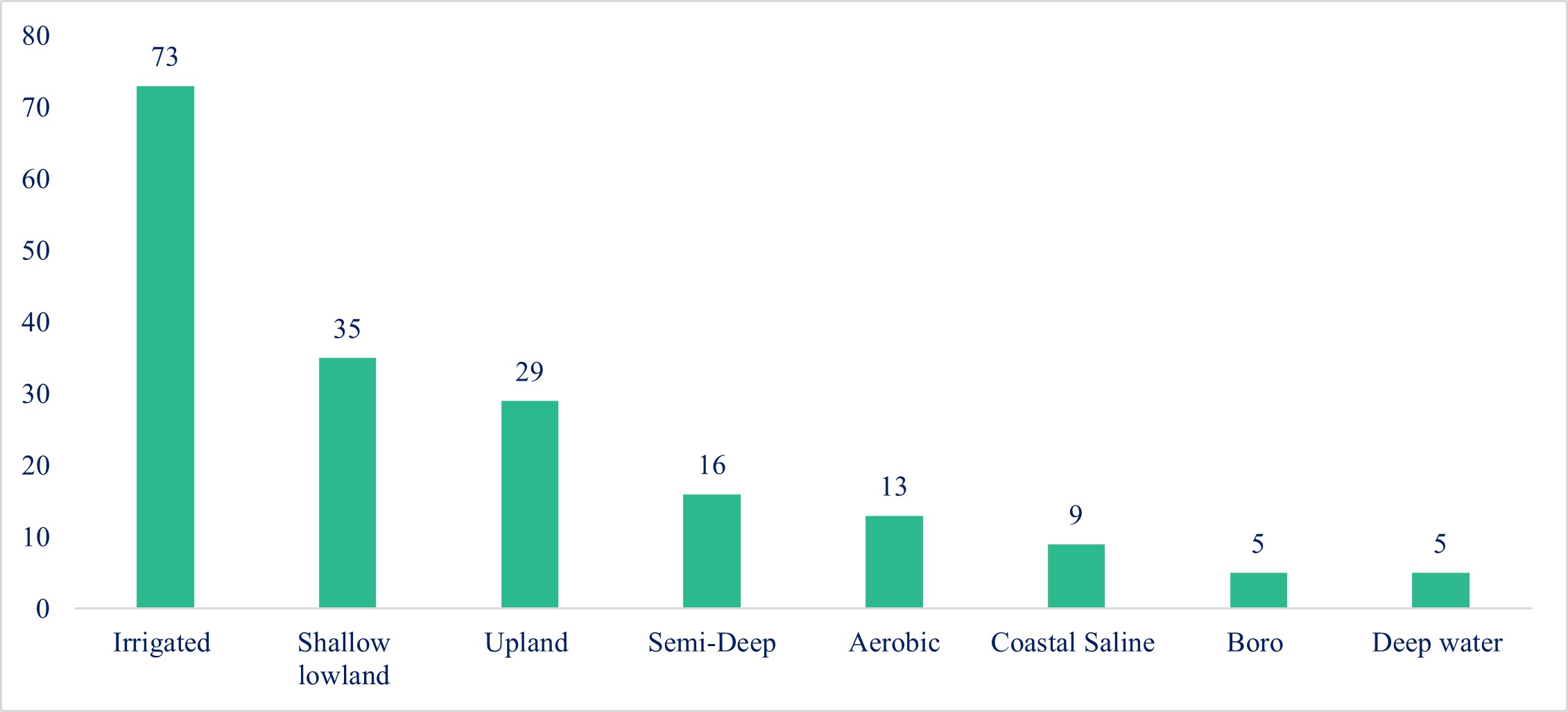
So far, the crop improvement division has developed and notified a total of 185 rice varieties (76 through CVRC and 109 through SVRC), including 6 hybrids, catering to diverse rice ecologies and types across the country. Our varietal portfolio includes climate-resilient varieties (such as those with drought, submergence, combined drought and submergence tolerance, and salinity tolerance), aromatic varieties, nutrition-focused varieties (rich in protein and zinc), biotic stress-resistant varieties, and those suited for different rice-growing ecologies. Out of 185 released rice varieties, the institute has maximum 73 varieties for irrigated ecology followed by 35 varieties for shallow lowland, 29 varieties for upland, 16 for semi-deep, 13 for aerobic, 9 for coastal saline, 05 for boro and 05 for deep water ecologies of the country. Moreover, the grain type is one of the desirable attribute by the consumer for consuming rice grains. ICAR-NRRI, has considered the consumer preference of a diverse class and region in its rice breeding programme and consequently has its varieties displaying five distinct grain types namely short bold, medium bold, medium slender, long bold and long slender. Currently, the institute has one variety for short slender grain type followed by five for medium slender, 31 for long bold, 44 for long slender, 45 for short bold each and 53 for medium slender grain type which is catering to the diversified consumption needs of the society.
The anther culture protocol “Method for Albino-Free Shoot Regeneration in Rice through Anther Culture” (Patent No. 401679) was granted on July 20, 2022. The effectiveness of the protocol has been confirmed by the successful generation of numerous doubled haploids (DHs) from various genetic backgrounds. This includes hybrids such as CR Dhan 701, BS6444G, 27P63, Arize 8433DT, Arize 6453, and Arize Gold, as well as intervarietal crosses like IR20 x Mahulata and Savitri x Pokkali. This genotype-independent androgenic protocol for indica rice has been successfully commercialized, enabling the accelerated delivery of crop varieties including rice, maize, sugarcane etc. and facilitating trait mapping.
Additionally, the institute has also developed 59 stable CMS lines (WA, Kalinga-I and O. perennis etc., respective maintainers and >100 good restorers for further HR breeding invigoration. Among the CMS, Annada A (WA), Pusa 33A (WA), Sarasa A, Manipuri A (WA), Kiran A (WA), Moti A (WA), Deepa A (WA), Krishna A (O. perennis), Krishna A (Kalinga I), Padmini A, Mirai (Kalinga I), PS92A and Sahbhagidhan A etc. are more prominent and extensively utilized for hybrid development. The CMS, CRMS31A (WA) and CRMS32A (Kalinga-I) are substantially utilized in varietal development in India. The medium late duration CMS, CRMS24A, CRMS40A and CRMS 56A (>45% outcrossing) are suitable for development of late duration hybrids; and short duration CMS, CRMS8A, CRMS51A, CRMS52A, CRMS53A, CRMS 54A, CRMS57A, CRMS58A, CRMS59A are useful for hybridization of rainfed-upland area/ ecosystem.
During 2019-2024, a total of 23 unique rice germplasm were registered with NBPGR, New Delhi. Besides, 10 rice varieties/hybrids were registered with PPVFRA, New Delhi.
Impact of technologies related to crop development
The trends in breeder seed indents for NRRI rice varieties highlight the institute’s significant role in supporting the formal seed system in India. From 2004-05 to 2023-24, breeder seed indents for NRRI varieties increased nearly eightfold, from 34 quintals to 264 quintals, reflecting their growing popularity among farmers. Over past five years, the number of NRRI varieties in the formal seed system rose from 34 in 2018-19 to 41 in 2022-23. The top ten varieties indented in 2018-19 included Swarna Sub1, Pooja, Satabdi, CR Dhan 500, Sarala, Gayatri, CR Dhan 1009 Sub1, Annada, Varshadhan, Savitri, CR Dhan 307, and CR Dhan 310. By 2022-23, the top ten indented varieties were Swarna Sub1, CR Dhan 1009 Sub1, CR Dhan 310, CR Dhan 311, CR Dhan 800, CR Dhan 203, Pooja, CR Dhan 101, Improved Lalat, CR Dhan 409, and CR Dhan 801. The increasing indent of climate-resilient and biofortified varieties is notable.
Besides, the institute has commercialized six hybrids, Ajay, Rajalaxmi, CR Dhan 701, CR Dhan 702, CR Dhan 703 and CR Dhan 704, which are very popular among farmers. These hybrids are commercialized under public-private partnership mode, licensed to 25 seed agencies. During 2009-2024, total 53 memorandum of understandings (MoUs) were signed which added over Rs. 2.0 crores to the institute’s revenue, directly as upfront payment.
The anther culture protocol “Method for Albino-Free Shoot Regeneration in Rice through Anther Culture” (Patent No. 401679) was granted on July 20, 2022 is commercialized through non-exclusive licensing to M/S Daftari Agro Pvt. Ltd. Nagpur, Maharashtra. Besides, hands on training on DH approach were extended to public and private institutions for non-rice crops.
Additionally, contribution of ICAR-NRRI to national rice breeding is immense. Over the years, its varieties have been used as parents in the development of 244 rice varieties across India. The institute’s germplasm accessions, many of which have been registered with ICAR-NBPGR, continue to contribute to modern rice breeding, enhancing both resilience and nutritional quality.
2. Technologies related to Crop Production
The following technologies have been developed for sustainable rice production
- Android based app “riceNxpert”: a real time N application tool for enhancing N use efficiency in rice
- Conservation agriculture technology for rice maize cropping system in Odisha
- Liquid formulation of rhizospheric nitrogen fixing bioinoculant for rice (NRRI-RhizoN)
- Liquid formulation of endophytic nitrogen fixing bioinoculant for rice (NRRI-EndoN)
- Technology of co‑applied nitrogen and auxin via nano‑clay‑polymer composites to enhance yield and nitrogen use efficiency
- Eco-friendly methanotroph formulation for mitigation of methane emission from rice
- Technology for capturing carbon, phosphorus and potassium in soil through SRO minerals transformation in rice rhizosphere
- Customized Color Coded Tensiometer, Eco-friendly Irrigation Alert System and NRRI-Aerobic rice moisture sensor for water management
- Customized Leaf Colour Chart for real time nitrogen management in rice
- Tech NRRI Decomposer for in-situ decomposition of paddy straw
- Bio-fertilizer consortium (BC) for nutrient management in organic rice-vegetables cropping system in Sikkim
- Microbial consortium (MC) for management of soil-borne fungal pathogens and leaf folder in organic rice-vegetables cropping system in Sikkim
- Rice-straw- pulp -based plate
- Development of nutritionally rich extruded snacks prepared from black rice, pearl millet, corn and green leafy vegetable
- Formulation and standardization of nutritionally rich fortified rice cookies
- NRRI-Azolla- Sporocarp Formulation for Nitrogen management in Low-land Rice
- Single row self-propelled wetland weeder
- Azolla-pellet making machine
- Regional scale measurements of Methane and Nitrous oxide emissions from rice fields using DNDC modelling and remote sensing
- Site specific nitrogen management in rice using remote sensing
- Technology of urea briquette application on low land rice for enhancing productivity and reducing greenhouse gas emission
- Climate Smart agriculture technology for rice green gram cropping system in fold and drought prone river command area
- Modified eddy covariance for estimation of land surface energy fluxes and energy balance by introducing heat storage component
- Technology for reducing the environmental impact of rice production in subtropical India by minimizing reactive nitrogen loss
- Production technology for zero tillage non-puddle transplanted rice
Impacts of the Technology related to Crop Production
- Customized leaf colour chart: Since CLCC based N recommendation could increase N recovery efficiency from applied urea by 9.1-12.2% as compared to conventional practice in transplanted rice it has the potential to save 18.5-27.3% urea to produce same level of yield. Field trials also demonstrated application of 75% of recommended N on the basis of CLCC reading produced similar yield as that of 100% RDF, thereby saving 25% of fertilizer.
- Best management practices: In rice–rice cropping systems, application of FYM with NPK as balanced fertilization for 39 years resulted in annual 35-55% less emissions per unit yield over unbalanced fertilization. Though the GHGs emissions and GWP were higher under the combined application of FYM + NPK but emissions per unit grain yield were moderate under this treatment. Therefore, the combined application of FYM + NPK is a viable option in managing soil fertility, moderating GHG emissions and sustaining rice yield in tropical flooded soils.
- Climate smart resource conservation technology (CRTC): There was 32% savings in input energy and 55% gain in energy ratio in CRTC over control. The GHGs emission as a whole was considerably low in CRCT than conventional transplanting rice. There was decreasing global warming potential (GWP) and GWP/Yield ratio by 2.5% and 7%, respectively in CRCT as compared to control. Therefore, it is not only an energy saving and yield sustainable technology but also it can be used as a climate smart agricultural management option for environmental sustainability.
- Agglomerated urea briquettes: The grain yield of rice was increased by 21.5% with the use of urea briquette amended with fly ash as compared to the urea briquette alone. Use of urea briquette amended with fly ash resulted in 8.9% reduction in nitrous oxide emission and decreased global warming potential by 26% as compared to the urea briquette alone. Application of urea briquette using briquette applicator produced 10% higher yield than broadcasting of urea granule.
- Improved rice based integrated farming system: The rice based farming system models have been validated and upscaled in farmers’ fields through farmer’s participatory mode. These systems with higher land and water productivity ensure food, nutrition and livelihood security for the farming communities, particularly for the small and marginal farmers along with employment generation through engagement of family members in the farming.
- Nutrient management in flood prone area: When N applied after submergence without basal P resulted in 16.7% yield reduction but when it combined with basal P then yield loss before submergence along with basal P resulted in yield reduction of 35.3% but when no basal P was supplied, yield subdued up to 44.7% indicating maximum damage was only 4.2% as compared to non-submerged condition. The cost of production was lower when farmers field practices (FFP) was followed but the net returns and B: C ratio were higher when basal P, K and post-flood N management options were adopted because of higher grain yield under the treatment.
- Use of fly ash as soil ameliorant and source of plant nutrient: Application of fly ash @ 50 t ha-1 along with 75% RDF and 25% through FYM on N basis has recorded 38% higher yield as compared to the farmers practice (40:20:0 kg N:P:K per ha). Application of fly ash @ 50 t ha-1 along with 75% RDF and 25% through FYM on N basis has resulted in B:C ratio of 1.98, whereas the farmers practice (40:20:0 kg N:P:K per ha) resulted in B:C ratio of 1.43:1.
- Greenhouse gases (GHGs) emissions and climate change studies: More than five technologies recommended by this institute on mitigation cum adaptation of GHGs emissions, climate resilient village in different parts of the country. Those five technologies are CLCC based N management, DSR in heavy textured soil, rice-fish farming system in lowland ecology, minimum tillage. Those technologies were also extensively demonstrated, evaluated and adapted in 3 districts (Cuttack, Ganjam, Jagatsinghpur) at Odisha.
- Farm implements: Ten numbers of farm implements have been commercialized and about 3715 number of units sold which cover 31,319 ha area. These implements have resulted in total cost saving of Rs. 12.11 lakhs and total energy saving of 40.98 lakh MJ in comparison to manual operation.
- Biofertilizers, biocontrol agents and microbiome: The division has developed rice-specific endophytic bacterial (Azotobacter chroococcum Avi2), Cyanobacteria and Azolla formulations for nitrogen management in rice under sub-tropical condition which could replace ~25% of chemical nitrogen without compromising yield.
- Six Indian patents has been granted on entomopathogens formulations for management of rice leaf folder were filed by the division with the following numbers 264/ KOL/2015, 263/KOL/2015, 261/KOL/2015, 262/KOL/2015, 260/KOL/ 2015, 265/KOL/2015.
- Developed microbial consortium for in-situ and ex-situ paddy straw residues management in rice –rice and rice –wheat cropping system.
3. Technologies related to Crop Protection & Impact
- Alternate Energy Light Trap: The Alternate Energy Light Trap (AELT) is a patented device of the ICAR-National Rice Research Institute, Cuttack, Odisha with Patent No. 357993 The device has the mechanism of trapping the harmful phototrophic insects and escaping the natural enemies in the crop fields by utilizing solar energy. This Light trap has been commercialized by two firms and the product is being manufactured.
- Trichoderma based composition for control of plant pathogen: Two Trichoderma species having excellent ability to protect the rice plant from soil and seed borne diseases as well as excellent growth promotion capability have been developed individually or in combination (1:1) is used as bio priming of seeds. The formulation has been tested through All India Coordinated Rice Improvement Project for consecutive three years and observed to be excellent alternative for chemical fungicides for seed bio priming. A Patent (No. 383679) has been granted to this product from Indian Patent Office (Kolkata). The formulation has been tested in Hazaribagh under drought condition and it has been recorded that the Trichoderma treated paddy gave 12% higher yield than that of the control one (NRRI Annual Report 2017). The formulation has been tested in farmer’s field where higher yield and total biomass of paddy was recorded in treated plants.
- Solar 24×7 Insect Trap: Innovative Solar Insect Trap is a combination of Light and Sticky trap with unique features that escapes the beneficial insects and kills harmful insects In day time the pests will be attracted towards yellow colour/ blue colour and in night time the flying insects will be attached towards light. This light trap has been commercialized by firm and as on date the product has reached to more than 8 lakhs farmers and institute received about Rs.3.0 crores royalty.
- Eco-friendly light trap harmless to beneficial insects: This is a semi-automatic solar based light trap which automatically switch on during dark and off after ¾ hours as per timer set. The beneficial and harmful Insects are segregated and collected in separate chambers and the tiny parasitoids are escaped to environment.
- riceXpert App (Digital Product): riceXpert is a multilingual app developed both in android and ios platform. Farmers and other stake holders from more than 175 countries using this app with a download of more than 56000. The app provides information on rice cultivation and enable farmers to consult panel of experts. More than 2000 queries have been received from India.
- NRRI Tricho card (Tj) for management of rice yellow stem borer: Trichogramma japonicum (egg parasitoid) is recommended for yellow stem borer (YSB) of rice. Three tricho cards (60000 parasitized eggs/ha) are applied usually from 30th day after transplantation. Five such releases are made every 7-10 days intervals till egg masses or moth activity is not seen, whichever is earlier to control YSB. Till now, 6406 number of cards have been prepared and sold commercially to different stakeholders and generated revenue of Rs. 4.64 lakhs to the institute.
- NRRI Tricho card (Tc) for management of rice leaf folder: Trichogramma chilonis is an important egg parasitoid of rice leaf folder, Cnaphalocrosis medinalis. Three tricho cards (consisting of ~60000 parasitized eggs) per hectare are applied once moth activity is noticed. Five such releases are made at every 7-10 days’ interval till egg masses or moth activity is not seen, whichever is earlier. Card should be placed in the field before expected adult emergence date mentioned on the card. Till now, 12260 number of cards have been prepared and sold commercially to different stakeholders and generated revenue of Rs. 10.10 lakhs to the institute.
4. Technologies related to Crop Physiology & Biochemistry & Impact
Transgenic Rice for Enhanced Photosynthesis and Water Use Efficiency:
- Developed transgenic rice lines expressing the SiPEPC gene under the ZmPPDK promoter, resulting in a 21.9% increase in photosynthesis rates and improved water use efficiency.
- Designed a CRISPR-Cas9 multiplexing system targeting key photosynthetic genes (OsPPDK, OsPEPC, OsNADP-ME, OsCA) for improved photosynthetic efficiency under climate change scenarios.
Gene Editing for Stress Tolerance
- Applied CRISPR-Cas9 technology to target the OsCCA1 gene, improving tolerance to low-light stress.
- Developed plant bio-regulator-based seed priming techniques to enhance tolerance against osmotic stress.
Pre-Harvest Sprouting Resistance
- Identified 12 rice genotypes resistant to pre-harvest sprouting (PHS) and conducted molecular characterization, clustering them into resistant and susceptible groups.
Expanded CRISPR-Cas Toolkit with tracrRNA Variants
- Demonstrated the use of long-form tracrRNA (tracr-L) and its truncated variant (Δtracr-L) in genome editing.
- Verified their functionality through in vitro cleavage assays and in vivo editing in rice protoplasts, expanding the CRISPR-Cas toolkit for plant genome editing.
Abiotic Stress Tolerance in Rice
- Identified 181 aus rice genotypes with tolerance to drought and submergence, with Ratnagiri 45-2 and Rani Bhog showing superior performance.
- Developed Sub1-containing rice lines with thicker leaf gas films, enhancing survival under combined salinity and submergence stress.
Multi-Stress Resistant Rice Lines
- Screened and registered four genotypes tolerant to stagnant flooding and high temperatures.
- Identified 60 genotypes with stagnant flooding tolerance and 200 genotypes with high-temperature tolerance.
Low-Glycemic Index Rice Genotypes
- Characterized genotypes with varying amylose and amylopectin content, identifying IG 23 as having the lowest glycemic index.
- Studied key enzymes (GBSS I and pullulanase) that influence resistant starch formation.
Nutritional Enhancement via Processing Techniques
- Developed grain processing methods like parboiling and fermentation, which improved antioxidant activity and zinc content.
- Identified nutrient-retaining genotypes like Kalinga Dhan 1202 and Govinda, with high iron and zinc content.
Photosynthetic and Growth Trait Screening
- Screened 211 elite rice genotypes, identifying high-yielding lines like IG-008 and IG-161 with superior photosynthetic and growth traits such as flag leaf area, chlorophyll content, and culm strength.
5. Technologies from Social Science Research & Impact
Social Science Division has developed following four Extension Models –
- INSPIRE – the model envisages rapid outreach to the rice farmers in convergence mode.
- 4S4R – the model aims at self-sufficiency in rice seed production at the farm level.
- ARORICE – this is an export-oriented rice value chain model, featuring non-basmati aromatic rice.
- FPO-based models – these are standardized extension models, leveraging the potential of resource aggregation and collective marketing.
6. Technologies from Research Stations & Impact
Rice varieties
- Total 24 varieties developed at CRURRS, Hazaribag, among which eight varieties notified in last two years. Climate resilient varieties developed are: CRD804, CRD808, CRD107, IR64Drt1
- In total 18 lines are in varietal pipeline: Sneha (1992); Vandana and Anjali (2002), Sadabahar and Hazaridhan (2004), Virendra and Abhishek (2007), CR Dhan 40 (2008), Sahbhagi Dhan (2011), IR64 Drt1 (2015); Gangavathi ageti and Purna (2017), TKD1 and TKD2 (2018), INHR2014-8 (2020), Aerobic Dhan 1 (2021), CR Dhan 320, CR Dhan 103, CR Dhan 107, CR Dhan 415 and NHR2022 (2022), and CR Dhan 804, CR Dhan 808 and CR Dhan 214 (2024)
- From the average breeder seed indent (BSI) of 5 years for the rice variety Sahbhagi dhan it has been estimated that area coverage by this variety is about 1.98 m ha across 13 states of the country (Pathak et al., 2018).
Advanced diagnostics:
- Recombinase polymerase amplification (RPA) assay for rapid detection of false smut pathogen and rice tungro virus directly from rice spikelet and leaf sap, respectively (Banerjee et al., 2023) – Krishi portal Technology code: 201718899821928
- Recombinase polymerase amplification (RPA) assay for rapid detection of aroma gene in rice (Banerjee et al., 2023) –Krishi portal Technology code: 201718888034205
Integrated crop management practices under drought-prone ecology: In rainfed drought prone upland areas, growing pigeon-pea as intercrop with rice not only improve and sustain their farm income but also to enhance the system productivity. Use of integrated nutrient source (50% RDF + FYM @5 t ha -1 along with Arbuscular mycorrhiza and Phosphorus Solubilizing Bacteria) is very helpful in maintaining soil fertility (mineral N content 46.2 ppm as compared to 31.2 ppm under control; and balance between active & passive C-pool) and minimizing the yield loss (2.64 t ha-1 REY as compared to 2.15 t ha-1 in rice sole).
Application of AM-inoculums reduced the application of phosphatic fertilizer: In AM-supportive cropping systems, optimum P dose is 20 kg P2O5 ha-1 as compared to recommended 30 kg P2O5 ha-1. The residual effect of AM inoculums is also significant in the non-rice crop like maize and horse gram.
Device for insect images: Regional Coastal Rice Research Station, Naira, ICAR-NRRI has developed a device named “NoctiLens”, a fully automated device for capturing images of trapped adult insects. This device is designed to capture adult nocturnal insect images that damage agricultural and horticultural crops and useful for monitoring and counting the insect pest to avoid the manual drudgery and errors. This device also provides a uniform and reliable monitoring system of insect pest for effective screening of the genotypes and delivery of advisories to the stakeholders.